
How Global Warming is Adding Arsenic to Your Rice
And three possible solutions, each with their own challenges.

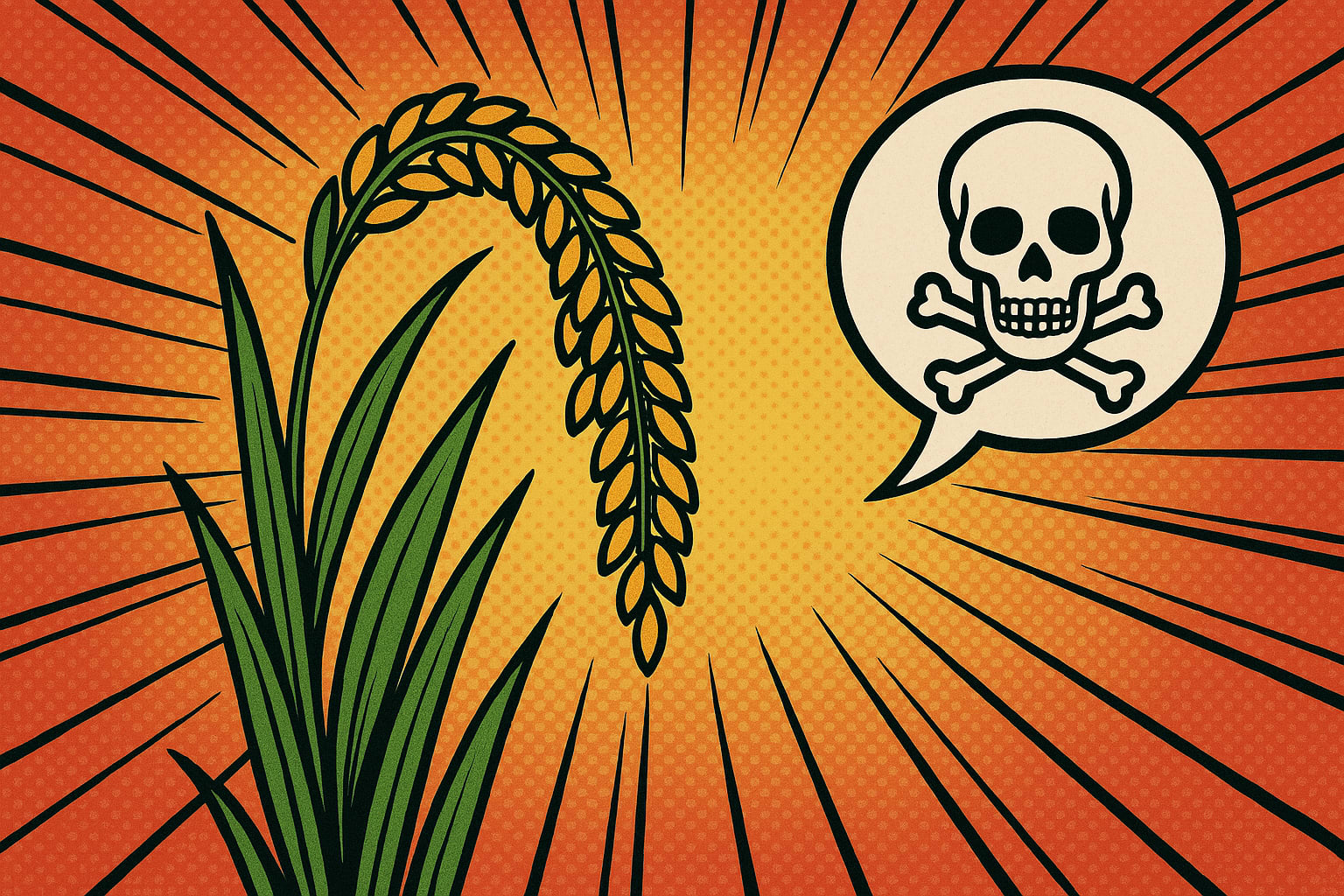
Rice is the most consumed grain in the world. From sushi to risotto to a staple of many countries carbohydrates, it’s a critical daily food for billions.
And it’s at risk from climate change — in multiple ways. Changing levels of rainfall can make it impossible to grow rice when an area becomes too dry. Rising seas make groundwater saltier, preventing rice from growing. Higher temperatures can stress the crops, reducing yield. Increased rates of extreme weather can destroy entire crops with a single storm.
And there’s a new threat, described by researchers from Columbia University in a peer-reviewed publication in The Lancet.
Arsenic.
Warmer temperatures may lead to rice containing higher levels of toxic arsenic. And in this case, it’s not due to the rice itself, but because of certain bacteria that live in the soil.
The two types of arsenic
Arsenic, element number 33, is found around the world. Compounds that contain arsenic are classified as either organic or inorganic; this isn’t based on whether they were treated with pesticides, but whether the arsenic is bonded to carbon-based structures.
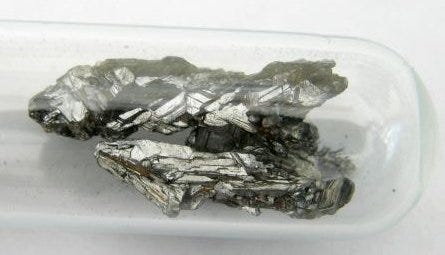
Organic arsenic compounds are more commonly found in plants, animals, and seafood. Inorganic arsenic compounds are commonly found in soil and water, especially polluted water.
This distinction — organic vs. inorganic — is important because not all arsenic is equally toxic for us. We can handle organic arsenic compounds quite well. This is why we aren’t typically poisoned by eating seafood; yes, it has lots of arsenic in it, but that arsenic is locked into organic molecules that the body can process and excrete (pee out) without much trouble.
It’s the inorganic stuff that’s especially nasty for us. Unlike the organic-bound arsenic, the body has trouble getting rid of inorganic arsenic. It builds up in organs and in keratin-rich tissue, like hair, nails, and skin.
This long-term build-up is toxic for us. One analysis, looking at arsenic-poisoned groundwater in Bangladesh, estimated that as many as 43,000 deaths per year could be due to chronic arsenic poisoning.
The FDA, as well as other health organizations around the world, classify arsenic as a carcinogen; it causes cancer. It creates reactive oxygen species, types of molecules that damage DNA and lead to breakages. (This is the bad outcome that anti-oxidants are supposed to protect from, although most anti-oxidant ‘superfoods’ are overhyped marketing.)
There are regulations on how much arsenic can be in a food in place since 2008.
Which brings us back around to rice.
Rice is prone to soaking up arsenic
Rice grows in water paddies, which are flooded with water for part of the plant’s growth cycle. This makes them especially likely to take in additional arsenic compared with other grain crops like wheat or oats.
In rice, the arsenic tends to be present more in the outer hull — the brown part of the rice. If you eat white rice, you’re likely getting lower arsenic levels, although the health benefits of brown rice generally far outweigh any concerns about arsenic poisoning for adults.
Fellow health-focused Medium author Gideon M.K. did a great breakdown of the brown-versus-white-rice arsenic risk, drawing a very sensible conclusion that the differing levels of arsenic aren’t likely to matter for anyone who isn’t an infant, or for anyone eating less than an entire bag of rice per day.
But that could change if the rice takes in more arsenic.
As described by the authors of the recent study, “Impact of climate change on arsenic concentrations in paddy rice and the associated dietary health risks in Asia: an experimental and modelling study”, there are two big issues:
The water used to flood rice paddies is often contaminated with pollutants, including inorganic arsenic.
Soil microbes convert organic arsenic to inorganic arsenic. They do this faster when it’s warm and when there’s extra carbon dioxide in the air — both of which increase from climate change.
Previous studies have shown that arsenic levels in rice increase in warm temperatures, and also increase when there’s extra carbon dioxide — this is the first study to combine both of these factors and show that they amplify each other. Climate change, then, is the smoking gun.
The bacteria present in the soil convert soil arsenic (and water arsenic pollutants) into a form called arsenite, which is more easily taken up by plants, and is also more toxic for us to consume.
Higher temperatures = more arsenite production.
What can we do?
There are multiple possible solutions, although none of them are as easy as flipping a supposed “anti-arsenic” switch.
Option 1: we could work on developing genetically modified rice that is less prone to absorbing arsenic from its environment. This could dovetail with current efforts to create rice strains that better tolerate heat and drier conditions, to get a rice crop that’s better designed to survive our 21st-century world…
… but this takes time, and also scientific funding. That’s at risk in the US right now, and there’s also concerns that consumers may reject the idea of “GMO rice”. (Does the arsenic give it that classic flavor that you crave?)
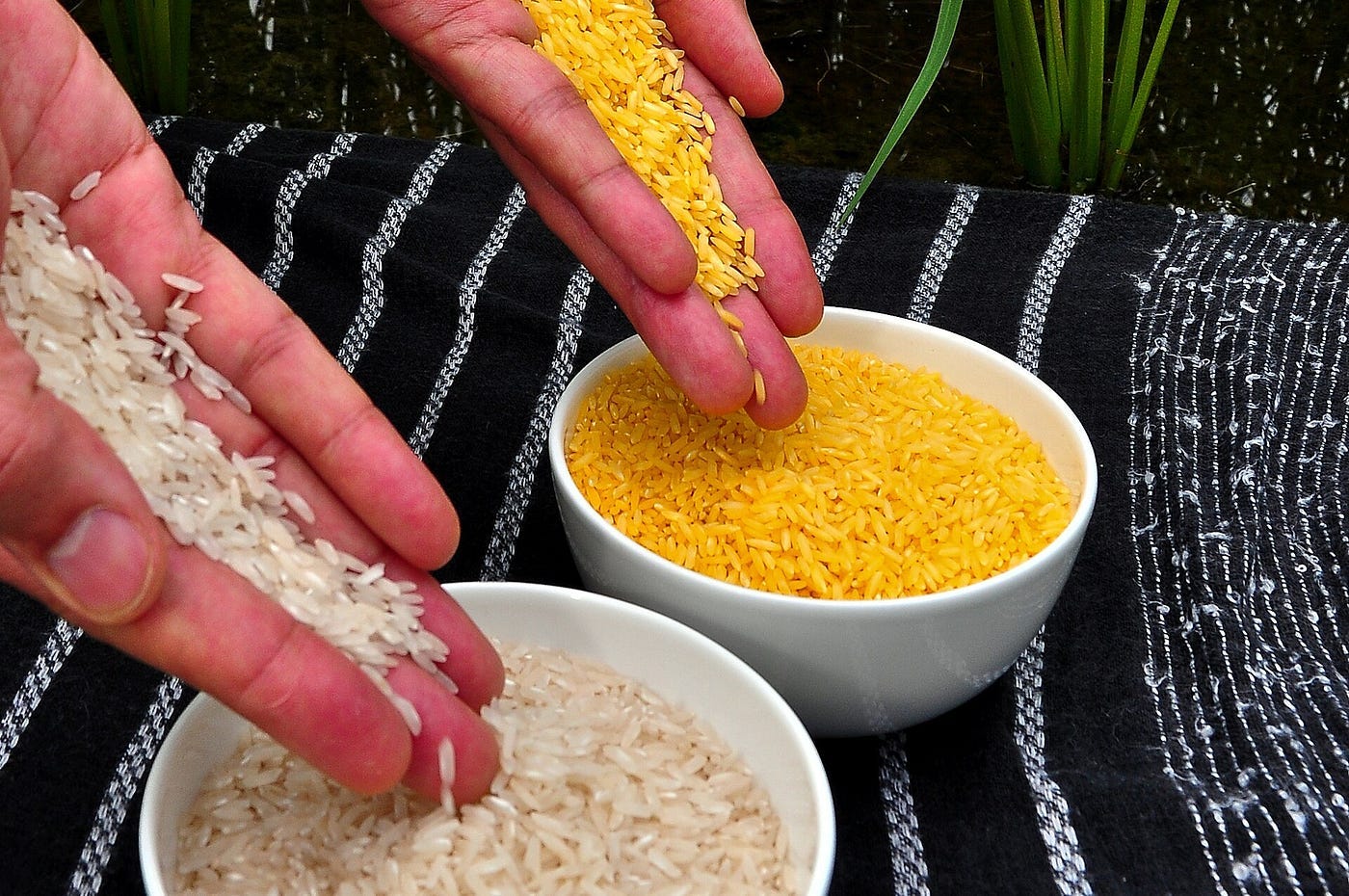
Golden rice next to regular white rice, showing the orange hue from the beta-carotene. Source: Wikipedia
Opposition to a genetically modified ‘low-arsenic’ strain of rice may mimic protests a decade and a half ago against “golden rice,” rice that was genetically engineered to contain more beta-carotene, a precursor to vitamin A. The goals were noble, as vitamin A deficiencies plague hundreds of millions around the world and can lead to blindness, low weight, and death, especially in children.
Yet anti-GMO activists protested the testing and growth of golden rice, despite multiple government and scientific groups declaring it safe. Activists burned rice paddies and sued, with a recent 2024 ruling blocking its growth in the Philippines.
Option 2: is not flooding the rice fields with water. Flooding the fields helps to stifle weeds, so there would need to be additional effort put into weeding the fields. There are methods, like the Cornell-designed System of Rice Intensification, that can replace flooding the paddies, but it takes work and farmers need to be convinced to switch.
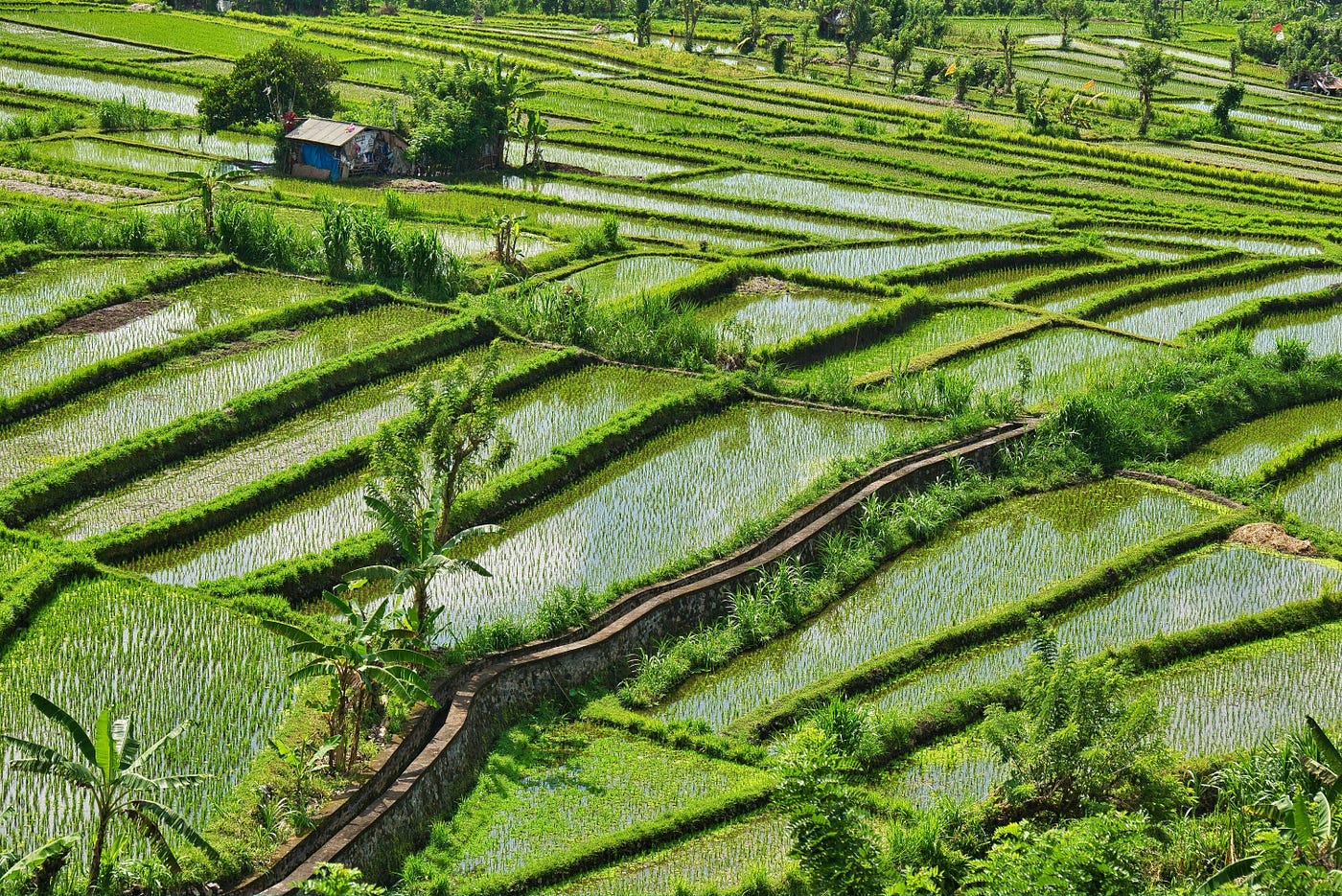
See that flooded rice paddy? No more of that. Photo by Steve Douglas on Unsplash
This would likely see opposition from farmers and rice cultivators. After all, the additional work of weeding is an immediate deterrent, while arsenic poisoning is slow and happens much further downstream. People don’t drop dead after eating a bite of arsenic-contaminated rice; it happens years later.
A third option: we could intervene after the rice is grown. Repeatedly washing the rice helps to lower arsenic levels, but it’s intensive and consumes more water. This also leads to the arsenic ending up in the water runoff. If that runoff isn’t properly treated, and it goes to a drinking water source, it’s just moving the arsenic from one place to another.
Option 3 is probably the worst possible intervention, but it’s also the only one that can be done downstream of growing the rice. This will also likely have the least benefit for low-income countries; places like the United States might advertise “triple-washed lower-arsenic rice” in upscale supermarkets, but that same benefit won’t extend to rice consumers in countries like India, Bangladesh, and across Africa.
Plants don’t just grow in a vacuum; they depend on the bacteria around them, in the soil, for many of their nutrients. Those bacteria can also produce other compounds that we, the end consumers of the plants, don’t want to see — like arsenic.
Climate change isn’t just going to result in rising seas and more extreme weather. It also affects our crops, even in ways beyond just the total amount of yield produced. This paper illustrates how climate change could make a once-healthy crop more toxic to us.
We can still intervene — but it’s not going to happen if we continue to see cuts in science funding.
Just one more reason for us to continue funding research: avoiding poisonous, cancer-causing rice.